The Hidden Cost of Always Adding: Why Enterprise Procurement Keeps Acquiring Vendors Instead of Strengthening the Ones It Has
A Pattern That Defies Logic — Yet Persists Across Industries
Ask any senior procurement officer at a large US enterprise whether their organization has too many suppliers, and the answer is almost invariably yes. Ask them what they plan to do about it, and the response often involves onboarding yet another vendor.
This is not carelessness. It is the product of structural incentives, organizational pressures, and a procurement culture that has historically rewarded speed over depth. The result is a growing accumulation of supplier relationships that consume resources, introduce risk, and quietly erode the strategic value that consolidated partnerships could otherwise deliver.
Understanding why this pattern persists — and what it actually costs — is essential for any enterprise serious about procurement maturity.
What "Supplier Debt" Actually Means
The concept of technical debt is well established in software development: shortcuts taken today create compounding costs tomorrow. Supplier debt operates on a similar principle. Each time an enterprise adds a new vendor to address a gap that an existing partner could have filled — with appropriate investment, communication, or contract restructuring — it incurs a relational and administrative liability that rarely appears on a balance sheet.
Supplier debt manifests in several concrete ways. Contract portfolios expand beyond the capacity of procurement teams to manage them actively. Compliance obligations multiply across dozens of vendor agreements, each with distinct terms, renewal windows, and audit requirements. Volume that could be consolidated to achieve meaningful pricing leverage is instead distributed thinly across a sprawling network, diminishing the enterprise's negotiating position with every new addition.
Perhaps most significantly, supplier debt crowds out the bandwidth required for genuine partnership development. When a procurement team is consumed by the administrative overhead of managing 200 supplier relationships, it has little capacity to cultivate the kind of deep engagement with a smaller number of strategic partners that drives innovation, preferential treatment, and long-term cost reduction.
The Organizational Dynamics That Drive Accumulation
The decision to add a new supplier rather than optimize an existing one rarely feels like a strategic choice in the moment. It feels like a practical solution to an immediate problem.
A business unit needs a capability its current supplier does not appear to offer. A sourcing manager, under pressure to deliver quickly, identifies a new vendor who can fulfill the requirement and initiates onboarding. What is rarely explored in that moment is whether the existing supplier could develop that capability, whether a renegotiated contract could unlock new service tiers, or whether the requirement itself reflects a communication failure rather than a genuine gap.
This dynamic is compounded by organizational silos. In many large enterprises, different divisions maintain their own supplier relationships with limited visibility into what other parts of the organization have already sourced. The result is redundant vendor relationships serving overlapping needs — a condition that marketplace platforms are uniquely positioned to surface, but only when procurement data is centralized and actively analyzed.
Incentive structures also play a role. Procurement professionals are frequently evaluated on their ability to secure new sources of supply, meet diversity spending targets, and demonstrate market responsiveness. Fewer metrics reward the less visible work of deepening existing partnerships, renegotiating terms to reflect changed volumes, or systematically retiring underperforming vendors.
The Financial Penalties Are Measurable — and Significant
The costs of supplier accumulation are distributed across multiple line items, which is precisely why they are so often underestimated. Vendor onboarding carries direct costs: system integration, compliance screening, contract negotiation, and initial performance monitoring. Industry estimates suggest that fully loading these costs produces per-vendor onboarding figures ranging from several thousand dollars for straightforward engagements to well above $50,000 for complex, high-value relationships.
Once onboarded, each supplier requires ongoing relationship management. Quarterly business reviews, contract renewals, performance assessments, and issue resolution all consume procurement capacity that scales with headcount, not with the strategic value of the relationship. An enterprise managing 500 supplier relationships does not simply incur five times the cost of one managing 100 — the coordination complexity grows nonlinearly.
Volume consolidation losses represent perhaps the largest hidden cost. When spend that could be concentrated with a preferred supplier is instead distributed across multiple vendors, the enterprise forfeits the pricing leverage that comes with meaningful volume commitments. In categories where incumbent suppliers offer tiered pricing structures, even modest consolidation can yield savings that dwarf the cost of whatever problem prompted the original new-vendor decision.
What Optimization-First Procurement Actually Looks Like
Shifting from a default posture of accumulation to one of deliberate optimization requires both analytical infrastructure and cultural change.
On the analytical side, enterprises need visibility into what their existing supplier base is actually capable of delivering — not just what it is currently contracted to deliver. Supplier capability assessments, conducted systematically and recorded within a centralized marketplace platform, allow procurement teams to identify latent capacity before initiating a new sourcing event. When a business unit requests a new vendor, the first question should be answerable from existing data: does anyone in our current network already do this?
Contract management discipline is equally important. Many enterprises discover, upon review, that existing supplier agreements contain provisions — service expansions, volume-based incentives, innovation collaboration clauses — that have never been activated. Unlocking these provisions costs far less than onboarding a new vendor and often delivers comparable or superior results.
Culturally, procurement leadership must reframe how success is measured. Reducing active supplier count while maintaining or improving service levels is a meaningful achievement. Developing a current partner to the point where it can absorb new categories of spend is a strategic win. These outcomes deserve the same recognition as securing a new source of supply.
The Role of Marketplace Platforms in Breaking the Cycle
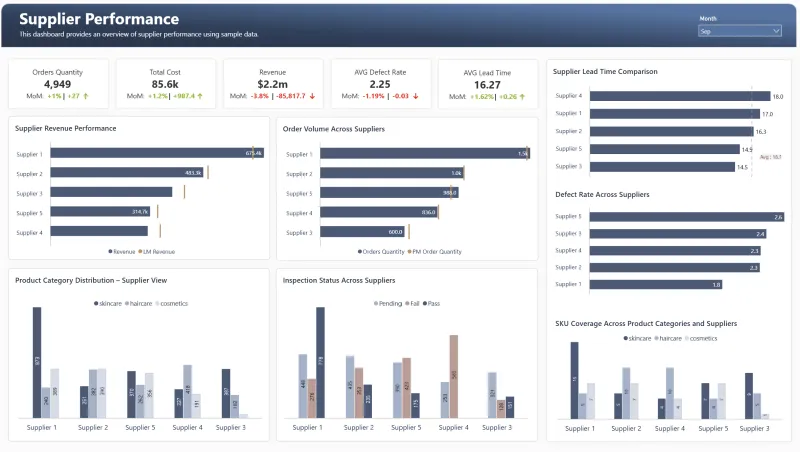
Enterprise marketplace portals are central to this transformation — but only when they are used as strategic management tools rather than transactional directories. A well-configured marketplace platform provides the supplier performance data, spend analytics, and contract visibility that make optimization-first procurement operationally feasible.
When procurement teams can see, at a glance, which suppliers are underutilized relative to their contracted capacity, which relationships have untapped service tiers, and where spend consolidation opportunities exist across business units, the case for adding yet another vendor becomes much harder to make without scrutiny.
The most sophisticated US procurement organizations are already building these capabilities. They are using their marketplace platforms not just to source and transact, but to actively manage the health and strategic value of every relationship in their portfolio. The result is a leaner supplier network that delivers more — and costs less to maintain.
Stopping the Accumulation Before It Compounds Further
Supplier debt, like its technical counterpart, does not resolve itself. Left unaddressed, it compounds — each new vendor adding to the administrative burden, the compliance exposure, and the diluted buying power that define an enterprise operating below its procurement potential.
The enterprises that will lead in procurement effectiveness over the next decade are not those with the largest supplier networks. They are those with the most deliberately managed ones — organizations that treat every new vendor decision as a last resort rather than a first response, and that invest in the platforms and practices required to extract full value from the partnerships they already hold.