Measuring What Actually Matters: How US Enterprises Are Closing the Supplier Performance Intelligence Gap
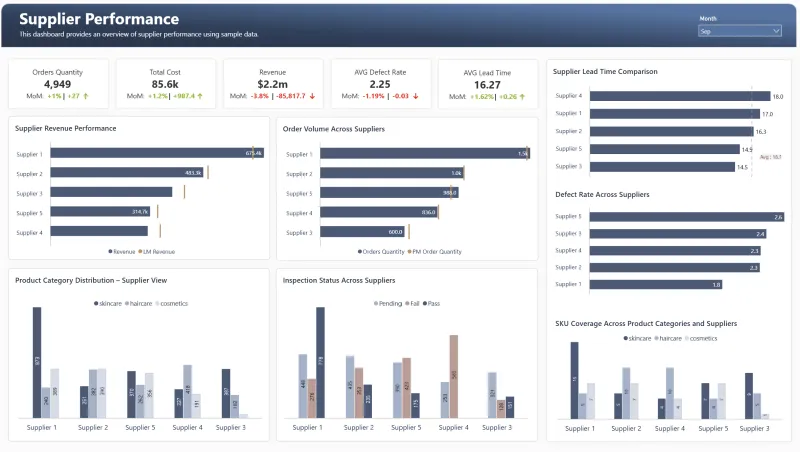
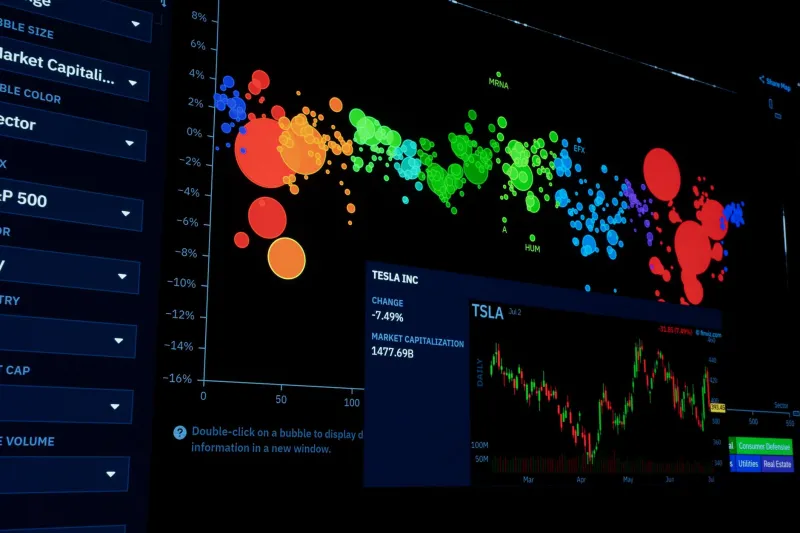
Photo: enterprise procurement analytics dashboard supplier performance data, via inforiver.com
For years, enterprise procurement teams have operated under a comfortable assumption: if the invoices are reconciled and the spend data is clean, the supplier relationship is under control. That assumption is proving costly.
Across industries—from manufacturing and logistics to healthcare and financial services—US enterprises are discovering that the metrics their marketplace portals generate capture only a fraction of the information needed to make truly informed sourcing decisions. Transaction volume, contracted pricing, and on-time payment rates are necessary data points, but they are not sufficient ones. The quality of a supplier relationship, and its downstream impact on profitability, is shaped by dimensions that most platforms were simply never designed to measure.
The result is a procurement intelligence gap that is quietly eroding margins, increasing operational risk, and leaving millions of dollars in unrealized value on the table.
The Limits of Transactional Metrics
Most enterprise procurement portals were built to solve a specific problem: consolidating purchasing activity and controlling spend. They do this reasonably well. Where they fall short is in translating that transactional data into supplier performance intelligence.
Consider what a typical portal dashboard reports. Spend by supplier category. Purchase order cycle times. Invoice approval rates. Contract compliance percentages. These are operational metrics, and they matter. But they say almost nothing about whether a supplier is delivering on quality commitments, how their lead times have trended over the past eighteen months, whether their financial stability poses a downstream risk, or how their performance compares to emerging alternatives in the marketplace.
For procurement leaders managing hundreds or thousands of supplier relationships simultaneously, this blind spot is not a minor inconvenience. It is a strategic liability.
What Leading Enterprises Are Measuring Instead
The procurement organizations pulling ahead of their peers are not simply adding more dashboards. They are rethinking which questions their data infrastructure needs to answer—and building measurement frameworks accordingly.
Delivery performance analytics represent one of the most immediate areas of investment. Rather than relying on supplier-reported on-time delivery figures, forward-thinking teams are cross-referencing purchase order timestamps against actual goods receipt records, flagging variance patterns, and correlating delivery reliability with broader operational outcomes such as production downtime or customer fulfillment delays. The difference between a supplier that delivers on time 94 percent of the time and one that delivers on time 87 percent of the time may sound marginal in a contract review meeting. On a manufacturing floor, it can mean the difference between meeting quarterly commitments and missing them.
Quality performance tracking is equally underserved by conventional portal reporting. Defect rates, return volumes, and inspection failure frequencies are often captured in ERP systems or quality management platforms but rarely integrated into the procurement intelligence layer where sourcing decisions are made. Enterprises that have bridged this gap are finding that some of their highest-volume suppliers are also their highest-cost ones when total quality-related expenses are factored in—a reality that contract pricing alone would never reveal.
Supplier financial health monitoring is a third dimension gaining traction, particularly following the supply chain disruptions of recent years. Procurement teams at major US manufacturers and retailers are now incorporating financial stability indicators—credit ratings, payment behavior data, publicly available financial filings—into their supplier risk frameworks. A supplier offering competitive pricing is a liability, not an asset, if their financial position makes them a candidate for sudden service interruption.
The Data Integration Challenge
Building this kind of multi-dimensional supplier intelligence is not a technology problem in the conventional sense. The data generally exists. The challenge is that it lives in separate systems—ERPs, quality platforms, logistics management tools, financial databases, and the marketplace portals themselves—that were not designed to communicate with one another.
This fragmentation is one of the central barriers US enterprises face when attempting to move from transactional procurement reporting to genuine performance intelligence. A procurement analyst who wants to understand the total cost of ownership for a specific supplier category may need to pull data from four or five different systems, reconcile inconsistent naming conventions, and manually construct a picture that should be available in real time.
The enterprises making the most progress are those treating data integration as a procurement infrastructure priority rather than an IT project. They are investing in middleware solutions, API connections between core systems, and in some cases purpose-built procurement analytics platforms that aggregate performance data across the supplier lifecycle. The goal is not a single dashboard for its own sake, but a shared intelligence layer that allows category managers, procurement directors, and executive stakeholders to make decisions from the same factual foundation.
Why Marketplace Vendors Need to Respond
The intelligence gap is not entirely the enterprise's problem to solve. Marketplace platform providers have a significant role to play—and a commercial incentive to do so.
As enterprise procurement leaders become more sophisticated in their demands, platforms that offer only transactional visibility will face increasing pressure from competitors that embed performance analytics natively. The most competitive marketplace environments of the next several years will be those that allow buyers to evaluate suppliers not just on price and availability, but on verified performance histories, risk profiles, and benchmarked quality metrics.
Some US-based platforms are already moving in this direction, integrating third-party risk data feeds, enabling buyer-side quality scoring, and building supplier performance modules that aggregate feedback across the buyer community. These capabilities are becoming a differentiator in enterprise platform selection conversations—and will likely become table stakes within the next procurement technology cycle.
Building the Internal Capability
For procurement organizations that cannot wait for their platform vendors to catch up, building internal analytics capability is the more immediate priority. This does not necessarily require large technology investments. It does require organizational commitment.
The enterprises seeing the strongest results are those that have designated ownership for supplier performance data—whether through a dedicated analytics function, a center of excellence model, or formal accountability within category management teams. Without clear ownership, even well-structured data initiatives tend to lose momentum after the initial build phase.
Equally important is establishing the cadence and governance around how performance data is used. Supplier business reviews that incorporate multi-dimensional performance scorecards rather than contract compliance checklists produce materially different conversations—and materially different outcomes. Suppliers who understand that their customers are measuring delivery reliability, quality trends, and risk posture alongside pricing compliance tend to prioritize those dimensions accordingly.
The Strategic Payoff
The procurement intelligence gap is a solvable problem, but solving it requires moving beyond the metrics that marketplace portals make easy to report. Enterprises that invest in the data infrastructure, organizational capability, and platform partnerships needed to measure what actually drives supplier value will not just reduce cost—they will reduce risk, improve operational performance, and build supplier relationships grounded in shared accountability rather than contractual obligation.
In a sourcing environment where competitive advantage is increasingly defined by the quality of decisions rather than the volume of transactions, knowing what your suppliers are actually delivering may be the most important capability a procurement organization can develop.